
Episode 9

full
Published on:

16th Jan 2026

Q&A: How to Process Failure, tips for Managing Up, and Breaking the “Rework” Cycle

Do you find yourself rewriting your team's work or spiraling after a failure? In this rapid-fire Q&A, Michael answers real questions on how to stop micromanaging, audit effectively, and lead through overwhelm.

Most leadership advice is too academic. It tells you to delegate, but not how to handle the anxiety when the work comes back wrong. It tells you to be resilient, but not what to write in your journal when you feel like a total failure.

In this special Q&A episode, Michael opens up the floor to the Growth Leaders Collective to answer real-world struggles. From the specific questions you need to ask to "inspect what you expect" (without hovering) , to the exact conversation script for renegotiating your workload with your own boss, this is pure practical application.

In this episode, you will learn:

-The Audit vs. Micromanage Trap: The specific questions to ask that get you the details you need without disempowering your team.

-The "Rework" Addiction: Why you keep fixing your team's work yourself and why this signals a victim mindset.

-Processing Failure: A 3-step writing exercise to separate what was your fault from what was external, so you don't lose your confidence.

-From Tech Expert to Leader: The one habit you must unlearn (the need to analyze and control everything) to survive the transition.

-Managing Up: How to influence your boss by tying your requests directly to their KPIs and compensation.

The Challenge Find one person on your team in the next 48 hours and connect their tactical role to the company's survival. Ask them: "Do you know how important your job is? And what this affects?". Walk them through the chain reaction of how their specific duty (e.g., accounting) enables the company's mission (e.g., paying salaries).

Resources:

-Join the Conversation: Join our Leadership Mindset 2.0 community on LinkedIn or Facebook

-Get Live Coaching: Move from listening to doing inside the Growth Leaders Collective. Start your $1 trial at RMichaelAnderson.com/GLC

Show artwork for Leadership Mindset 2.0

About the Podcast

Leadership Mindset 2.0
Transform From Tactical Doer to Strategic Leader: The Psychology of Scaling for Executives & Entrepreneurs
Leadership Mindset 2.0 is the definitive playbook for executives and entrepreneurs ready to break free from the "Doer Trap" and scale their business using psychology and strategy.

Host R. Michael Anderson has scaled multiple software companies to the Inc. 5000 list and was named Social Entrepreneur of the Year. Now, as a 2x Executive Coach of the Year, he uses that experience to help high-performers transform from Tactical Operators into Strategic Leaders.

In this podcast, Michael blends cutting-edge neuroscience, emotional intelligence (EQ), and battle-tested business strategy to help you overcome burnout, imposter syndrome, and the "Leadership Incompetence Trap" so you can lead with clarity and confidence.

Two New Episodes Every Week which include a mix of:
• Strategy: Neuroscience frameworks & leadership tactics to start your week.
• Mentorship: Live Q&A and specific answers to your leadership challenges.
• Coaching: A fly-on-the-wall look at real, unscripted executive coaching sessions as Michael helps leaders break through their blind spots live.
• Masterclasses: Listen in as Michael and guests teach valuable leadership and management skills to a real-life audience.

Topics include: The Psychology of Scaling, Burnout Prevention, Strategic Planning, Executive Coaching, and Emotional Intelligence.

About your host

Profile picture for R. Michael Anderson

R. Michael Anderson

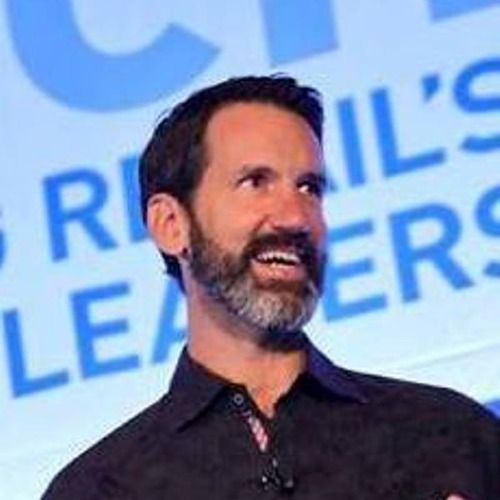
R. Michael Anderson, MBA, MA has a striking combination that creates truly impactful transformation in leaders – he has the real-life business success of founding, scaling and exiting three software companies, plus the educational background of a Masters Degree in Psychology.


This combination gives him the unique ability to connect to other leaders as a peer, then teaches evidence-based leadership skills that genuinely drive behaviour and performance.